Founder · WAVMVMT
Saadiq
Abdullah Khan
aka shim.wav
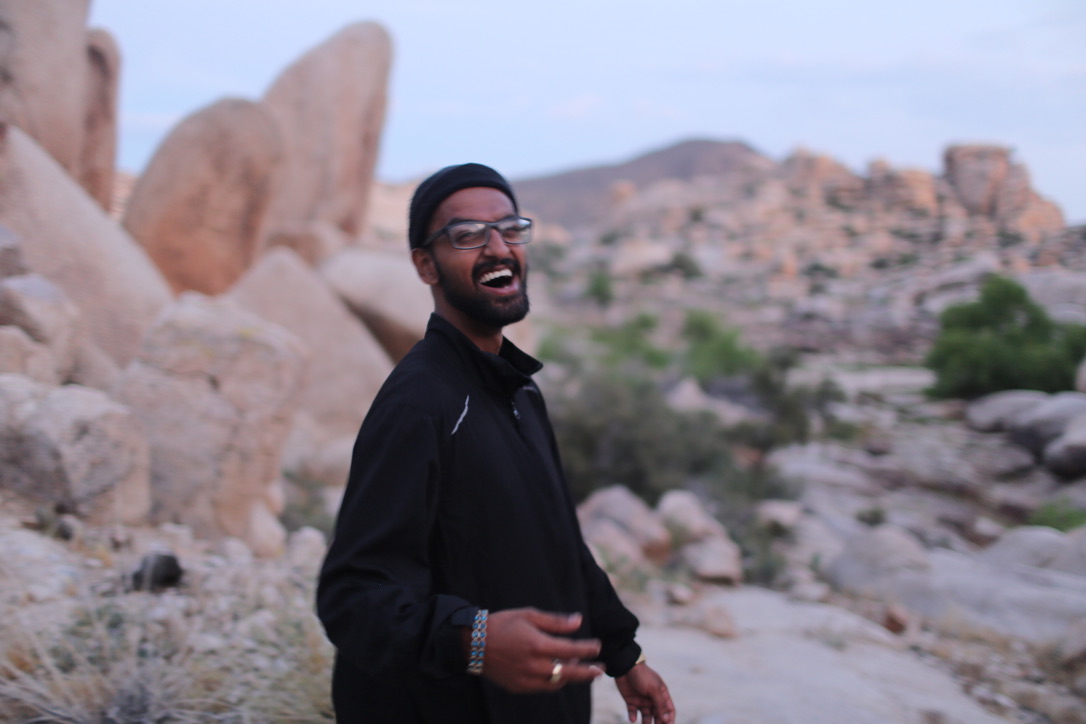
01In my own words
I came into all of this through music, creation and movement.
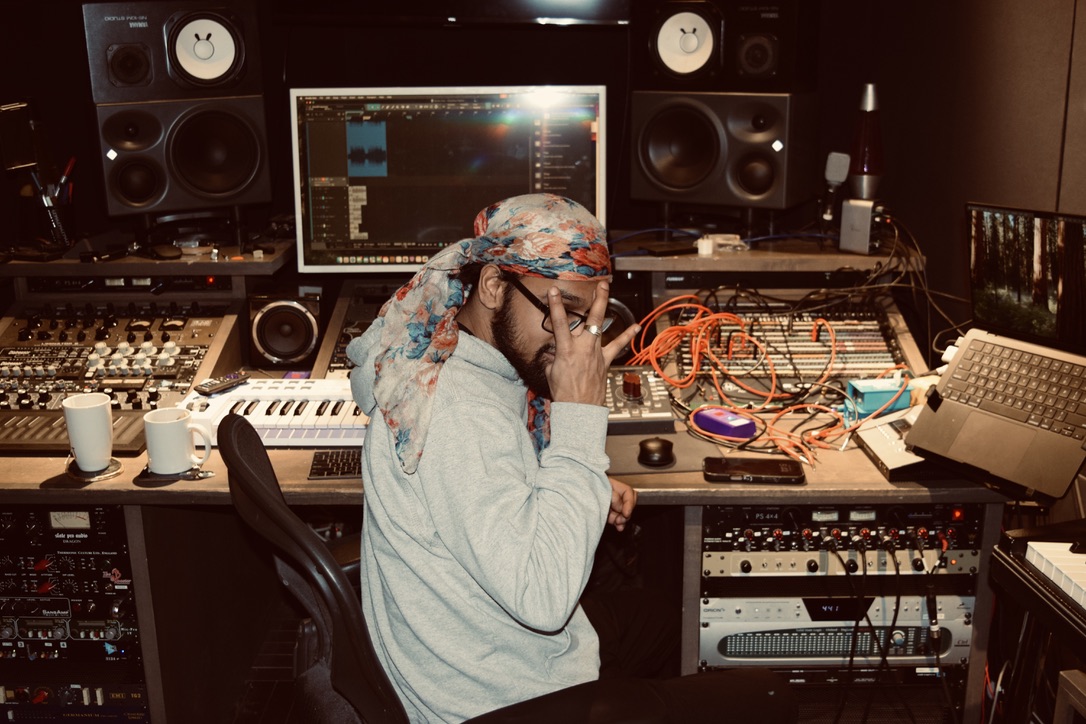
I make music as shim.wav. I produce, record, engineer and perform. A lot of my time goes into helping other people take an idea that's been sitting in their head and turn it into something they can actually hold: a song, a project, a plan.
Where I'm from matters to the story. I was born in Mississauga, Ontario. My family comes from Guyana. Now I'm based in Banff, Alberta. Different places, one thread: keep moving, keep creating, keep building.
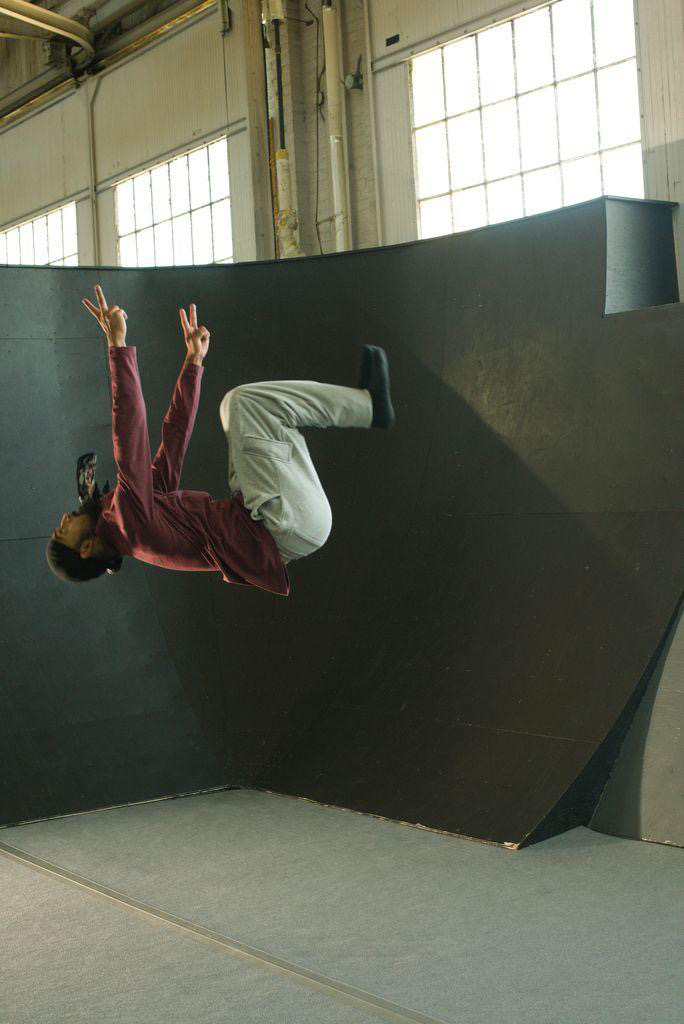
Movement shaped me too. Parkour taught me to learn by doing: try it, fall, adjust, try again. Look at the environment around you and use what's actually there. That way of thinking ended up in everything else.
WAVMVMT grew out of noticing that it's all the same thing. Everything involves directing energy.
02Who I am, layer by layer
Artist building worlds. Founder building systems. Lifelong student of sound, movement, people, consciousness and life.
shim.wav is an artist and founder building at the intersection of music, movement, entrepreneurship, community, technology, faith, mental wellbeing and human curiosity, turning more than a decade of lived experience into the evolving world of WAVMVMT.
Open any layer to go deeper. Each one has another layer inside.
Long before WAVMVMT was a name, parkour was my first laboratory. A railing is not just a railing. A gap becomes a calculation. Fear becomes information, repetition becomes competence, and competence becomes confidence.
For more than a decade I trained inside movement spaces and helped around them. People who would never have met became friends. Older athletes mentored younger ones. Beginners watched what was possible and learned how to fall, how to try again, how to fail publicly without being humiliated.
I also saw what it really takes to run a space: leases, insurance, staff, safety, programming, culture and money. That early education stuck with me.
“A powerful idea becomes meaningful only when someone can actually operate it.”
- Ask “what else could this become?”
- Learn to fall, then try again.
- Environments change what people believe is possible.
- A wall is not simply a wall. A staircase does not have only one intended purpose.
- An environment that looks ordinary to one person can be full of possibility to another.
- The confidence built through movement ended up affecting performance, business and everything else.
- Parkour never fully let me forget that play is one of the ways people learn.
Music is still the centre. I write, make beats, record, produce, engineer vocals, mix, master, DJ and perform. I have also helped build, equip and operate recording studios, which taught me the invisible work behind creativity: acoustics, signal flow, room treatment, budgets, and how to make another human being feel comfortable enough to record something vulnerable.
The music moves between rap, hip hop, R&B, reggae, house, drum & bass, jungle, rock, grunge, electronic and meditative sound. Projects have included Life Gets Better, but Fuck This Shit Sometimes and In Moderation.
I think about sound spatially and physically. Bass has weight. Vocals have proximity. Reverb creates distance. Dynamics create tension and release. A producer builds an environment inside time, and a listener temporarily lives inside that architecture.
“Production is architecture inside time.”
- Genre is a palette, not a rule.
- The gear supports the story; it is not the story.
- Document what being human actually feels like.
- The goal is not genre purity. The goal is feeling.
- Sophisticated tools are valuable, but tools do not replace judgment.
- Sometimes the smartest production decision is deleting half the session.
- A studio is a place where someone walks in with something intangible and leaves holding something real.
- Engineering taught me when a vocal needs to feel closer, when compression should disappear, and when a technically imperfect take is emotionally right.
Life Gets Better is not naive optimism. It does not pretend every situation works out. Hope and frustration can coexist. Faith and uncertainty, gratitude and grief, ambition and exhaustion can all live in the same person on the same day.
Mental health is part of my story because I've lived it: intensity, exhaustion, grief, burnout, instability. I'm not a clinician and WAVMVMT is not a medical organization. Professional support matters, alongside movement, rest, routine, community and purpose.
Creative industries can celebrate burnout until burnout becomes impossible to hide. I believe that has to change. Creative development and human wellbeing are connected.
“Things can be extremely difficult, and we can still continue moving.”
- Achievement means little if the person achieving it is collapsing inside.
- Never romanticize suffering.
- Professional care matters.
- Sometimes one of the most powerful interventions is simply having somewhere constructive to go.
- People benefit from exercise, rest, healthy relationships, good food, purpose and access to help when life gets difficult.
- That understanding directly shapes the WAVMVMT Center vision.
- Artists are often expected to expose deeply personal material while navigating unstable income, rejection and constant visibility. That has to change.
The beauty has come through music, family, friendship, movement, travel, nature, creative breakthroughs, unexpected kindness, faith, love and moments of deep connection. Standing somewhere and feeling grateful simply to be alive.
The darker chapters have included fear, loss, confusion, financial pressure, exhaustion, isolation, broken trust, mistakes and circumstances that forced me to reconsider people, systems, ambition, identity, spirituality and myself.
The goal is integration. Take what beauty taught. Take what darkness taught. Accept what cannot be changed. Repair what can. Take responsibility where responsibility belongs. Learn. Then build something better with what remains.
“Movement does not mean pretending darkness never happened. It means refusing to remain permanently inside it.”
- Take what beauty taught. Take what darkness taught.
- A difficult experience can become knowledge, then empathy, then better design.
- Build something better with what remains.
- Some records are deeply vulnerable. Others aggressive, playful or meditative. That range is intentional.
- I'm not interested in presenting a perfectly controlled human character. I'm interested in documenting what being human actually feels like.
- Lessons from hard chapters can prevent someone else from repeating the same mistake.
My faith gives me gratitude, resilience, purpose, perspective and responsibility. During dark periods it gave me something larger than the immediate moment to hold onto. Nobody has to share it to be part of WAVMVMT.
I'm deeply curious about consciousness through neuroscience, psychology, philosophy, meditation, flow states, music cognition and different traditions. Those are questions I'm exploring, not things I claim to have proven.
Fascination is not the same as certainty. A spiritual interpretation can coexist with psychological investigation. Faith does not require rejecting medicine, and scientific curiosity does not require eliminating spirituality.
“Faith can be present without becoming a demand.”
- Experience, belief, hypothesis and evidence are not the same thing.
- Personal experience can inspire questions. Evidence decides what is fact.
- Explore mystery without abandoning discernment.
- Prayer can exist beside neuroscience.
- Someone can have profound spiritual experiences and still value therapists, researchers, doctors, engineers and critical thinking.
- Do not confuse spirituality with certainty.
- WAVMVMT does not need everyone to arrive at the same answer. The conversation itself can be valuable.
- Gratitude creates responsibility. If I've received another day, another idea, another chance, I feel responsible for using it well.
If you enter psychology, learn from psychologists. Medicine, work with qualified professionals. Engineering, respect engineers. Finance, understand regulation and risk. Movement, involve qualified coaches.
Not everything has worked. Projects stalled, assumptions were wrong, beliefs changed. That's part of it. A mature builder has to be able to say “I was wrong”, “that version did not work”, or “someone else understood this better than I did.” WAVMVMT gets better by being honest about what didn't work.
There is also a lot I simply do not know: which ideas will fail, where every spiritual question leads, what the organization becomes in twenty years. That uncertainty is not a weakness. It is reality.
“Curiosity should expand collaboration, not replace expertise.”
- Reality gets a vote.
- WAVMVMT is an evolving hypothesis, not a finished ideology.
- One real thing at a time.
- The smartest person in the room is often the one willing to find someone who knows more.
- The goal is not to protect the theory. The goal is to discover what actually helps people.
- Large visions become real through small completed things: one song finished, one person helped, one lesson incorporated.
- The job is to keep learning faster than the world changes.
My life has repeatedly shown the power of informal knowledge exchange. Someone teaches you a production trick. Someone introduces you to an artist. Someone recommends a therapist. Someone gives you your first opportunity, or tells you honestly that an idea is terrible. These moments never appear on financial statements, yet they can alter entire lives.
Traditional entertainment measures followers, views and streams. Those matter, but WAVMVMT is interested in another measurement: participation. People who teach, build, collaborate, mentor, perform and create.
Access is the word underneath all of it. A single teacher, friend, piece of equipment, introduction or conversation can redirect a life. The dream is more people encountering possibilities that might otherwise never reach them.
“An audience watches. A community contributes.”
- Community is not an accessory; it is infrastructure.
- Measure participation, not just reach.
- Create environments where those small life-changing interactions become possible.
- Access matters: a single teacher, friend, piece of equipment or conversation can redirect a life.
- Sustainable access needs sustainable economics. Good ideas need economics capable of keeping them alive.
- The dream is not just impressive facilities. It is more people encountering possibilities that might otherwise never reach them.
- Over time that could mean scholarships, subsidized programming, youth programming, community and educational partnerships.
Underneath nearly every creative project is an entrepreneurial instinct. How does an event make money? How does a community facility survive? How can artists maintain ownership? How do you build systems instead of surviving from project to project?
I don't believe money is the only measure of value, but I also don't romanticize being broke. Resources matter. Profitable businesses can fund art. Successful projects can subsidize access. Economic understanding reduces vulnerability.
The long-term model goes beyond music revenue. Music creates attention, attention creates community, community creates events, events create partnerships, services generate revenue, and real assets create stability. That is the difference between an artist career and an artist-led ecosystem.
“Business is a tool. The question is what it is used to build.”
- Do not confuse money with meaning.
- Sustainable access requires sustainable economics.
- Build systems, not just projects.
- Too many creatives enter industries where everyone understands the business except them. That creates dependency.
- Empowerment is difficult without literacy: masters, publishing, contracts, royalties, licensing, taxes, negotiation.
- Ownership does not mean isolation. Scale eventually requires teams: accountants, lawyers, engineers, coaches, operators, mentors.
- The goal is informed collaboration: know enough about your world to understand what decisions are being made, then work with excellent people.
Years moving through studios, businesses, parkour communities, cities, travel and unusual personal experiences generated something beyond a catalog of music. They generated stories.
The media philosophy is simple: go somewhere, meet someone, learn what they do, ask questions, try something, understand the system, and show people a world they may never otherwise encounter. The host is connective tissue. The world is the subject.
The process itself is part of the story. Studio sessions, travel, business development, training, failures, research, changing your mind: all of it becomes content. That creates a record not only of success, but of the actual process required to reach it.
“Build the thing and document the building.”
- Curiosity becomes the format.
- The world is the subject.
- Document the process, not just the result.
- The camera serves a function similar to music. A photographer decides what the viewer sees; a producer decides what the listener hears.
- The media vision extends across music videos, documentary films, artist profiles, travel media, educational programming and eventually larger film work.
- Fashion is another physical expression: design pieces carrying raw visual language, spray paint, stencil graphics, imperfection and strong typography.
- Respect and consent matter in all of it. People represented in creative work remain human beings, not content assets.
One thing that can easily disappear when discussing ideas this seriously is that I also believe life should be fun. WAVMVMT is not intended to become a sterile institution filled with motivational slogans and beige furniture.
There should be humour, ridiculousness, music that is way too loud, friends roasting each other, games, parties, experiments, and dumb ideas that unexpectedly become great ideas. Serious conversations immediately followed by something completely unserious.
“Play is not the opposite of development. Play is one of the ways people learn.”
- Children understand play naturally. Adults often forget it.
- A serious mission can still be fun.
- Make room for play.
- Parkour never fully allowed me to forget this.
- Dumb ideas that unexpectedly become great ideas are part of the process.
- Sometimes hope sounds graceful. Sometimes survival sounds like profanity. Neither cancels the other.
My identity contains contradictions. Street and futuristic. Aggressive and meditative. Business-minded and deeply artistic. Analog and digital. Independent and collaborative. Faith-based and relentlessly questioning. Highly ambitious and increasingly committed to humility.
The contradictions are not bugs. They are the language. Life Gets Better can coexist with Fuck This Shit. A sound bath can exist beside drum & bass. Parkour can exist beside infrastructure finance. A serious mission can still be fun.
“The contradictions are not bugs. They are the language.”
- A difficult experience can eventually become empathy.
- A business can make money and still serve people.
- Do not confuse ambition with importance, or money with meaning.
- A rapper can study philosophy. An entrepreneur can meditate. A believer can ask scientific questions.
- Human beings do not stop being physical when they walk into an office, or stop needing creativity because adulthood told them to be practical.
- Each discipline teaches another: parkour teaches adaptation, music teaches listening, engineering teaches precision, DJing teaches energy, failure teaches iteration.
Today WAVMVMT is music, beats, creative work, community and this project, Let The Light Guide The Way. Some parts are active, some are developing, and some are long-term vision.
The long-term vision is a WAVMVMT Center: studios, movement, coworking, recovery, education and community in one connected place. It is a vision, not a building that exists yet, and not every version needs every piece. It is not a replacement for professional healthcare, it makes no medical claims, and where specialized services exist, qualified people provide them.
From the outside it can look like dozens of projects. Underneath is one: create art, environments, businesses, systems and communities that help people direct more of their energy toward becoming capable, creative, healthy, connected and fully alive.
“What if more of what people need to grow could exist in one connected environment?”
- Community is infrastructure.
- An audience watches. A community contributes.
- Document the build.
- Modern life separates body, mind, work, creativity, money, faith and community. A human being experiences all of them inside one life.
- Integration is not a buzzword. It is a practical response to a fragmented world.
- The vision did not begin as a polished business plan. It emerged from living, training, building, recording, struggling and meeting people.
- If WAVMVMT succeeds, it cannot remain dependent on one person. Healthy institutions become larger than their founders. Other people should lead, disagree, improve the idea and own parts of the work.
- Success should leave evidence in people's lives: great art, healthy businesses, meaningful employment, artists who understand their rights, communities forming, people gaining skills.
Believe deeply. Question constantly. Build what is useful. Make what is beautiful. Take care of people. Keep moving.
03The core values
Human beings contain enormous energy and potential. What matters is how we learn to direct it.
Freedom
People need room to discover who they are.
Access
Transformative environments and knowledge should reach beyond wealth, status, geography and insider networks.
Movement
Physical, emotional, creative, professional, intellectual and economic movement creates possibility.
Creativity
Humans need ways to make things that did not exist before.
Curiosity
Not knowing something should create questions rather than embarrassment.
Evidence
Personal experience can inspire inquiry. Evidence determines what can responsibly be claimed as fact.
Faith
For me personally, belief in God provides gratitude, perspective, purpose and endurance.
Respect
Different beliefs can coexist.
Mental Wellbeing
Achievement should not require destroying the human being pursuing it.
Community
Knowledge and opportunities become more powerful when they move between people.
Ownership
Creators should understand and participate meaningfully in the economics surrounding their work.
Consent
People deserve meaningful control over how they participate and how they are represented.
Professionalism
Specialized services require qualified people.
Humility
Being ambitious does not eliminate the possibility of being wrong.
Experimentation
Some worthwhile ideas do not yet have an established category.
Play
Life is not only productivity.
Collaboration
Big visions require people with different expertise.
Sustainability
Good ideas need economics capable of keeping them alive.
Execution
Ideas become meaningful when they enter reality.
Service
Success should create something useful beyond the person achieving it.
04The philosophy in its simplest form
- Believe deeply.
- Question constantly.
- Learn from people who know more than you.
- Distinguish experience from evidence.
- Take care of people.
- Move your body.
- Create things.
- Build sustainable systems.
- Admit when you are wrong.
- Make room for play.
- Remain grateful.
- Use technology intentionally.
- Do not confuse ambition with importance.
- Do not confuse spirituality with certainty.
- Do not confuse money with meaning.
- Do not romanticize suffering.
- Make beautiful things.
- Build useful things.
- Leave more possibility behind than you found.
- A songis energy directed into sound.
- Movementis energy directed through the body.
- A businessdirects people and resources.
- Capitalis stored capacity for action.
- Infrastructuredirects resources through physical systems.
So the deeper question is: where should the energy go?
I want to build things that help creative energy become something tangible: music, opportunities, knowledge, community, infrastructure. Systems that keep creating value long after I've stepped away from them.
Let The Light Guide The Way is one expression of that. Can an album help start a real solar project? I don't know yet. But I truly believe it's possible, and it makes sense. It's about bringing all of us together to create and make this happen, and documenting everything in real time so we can keep building it together.
I don't have every answer. Where I don't know something, I'll find people who do. That's most of what WAVMVMT is: a way of bringing people and energy together so things actually get made.
The count, live
···
Counting everyone who has raised a hand.
Non-binding indication of interest. No funds are accepted.
Saadiq